1
Unit 1
Biological Bases of Behavior
15-25% of exam · ~17-23 class periods
🧠
Unit 1: Biological Bases of Behavior
Heredity and environment, neurons and the brain, the nervous system, sleep, and sensation.
🎙 Episode 1 · 22:41
0:00
22:41
Term
What does heredity refer to in psychology?
Unit 1 · Biological Bases of Behavior
tap to flip
Definition
Genetic or predisposed characteristics, your 'nature', that influence physical, behavioral, and mental traits.
Card 1 of 25
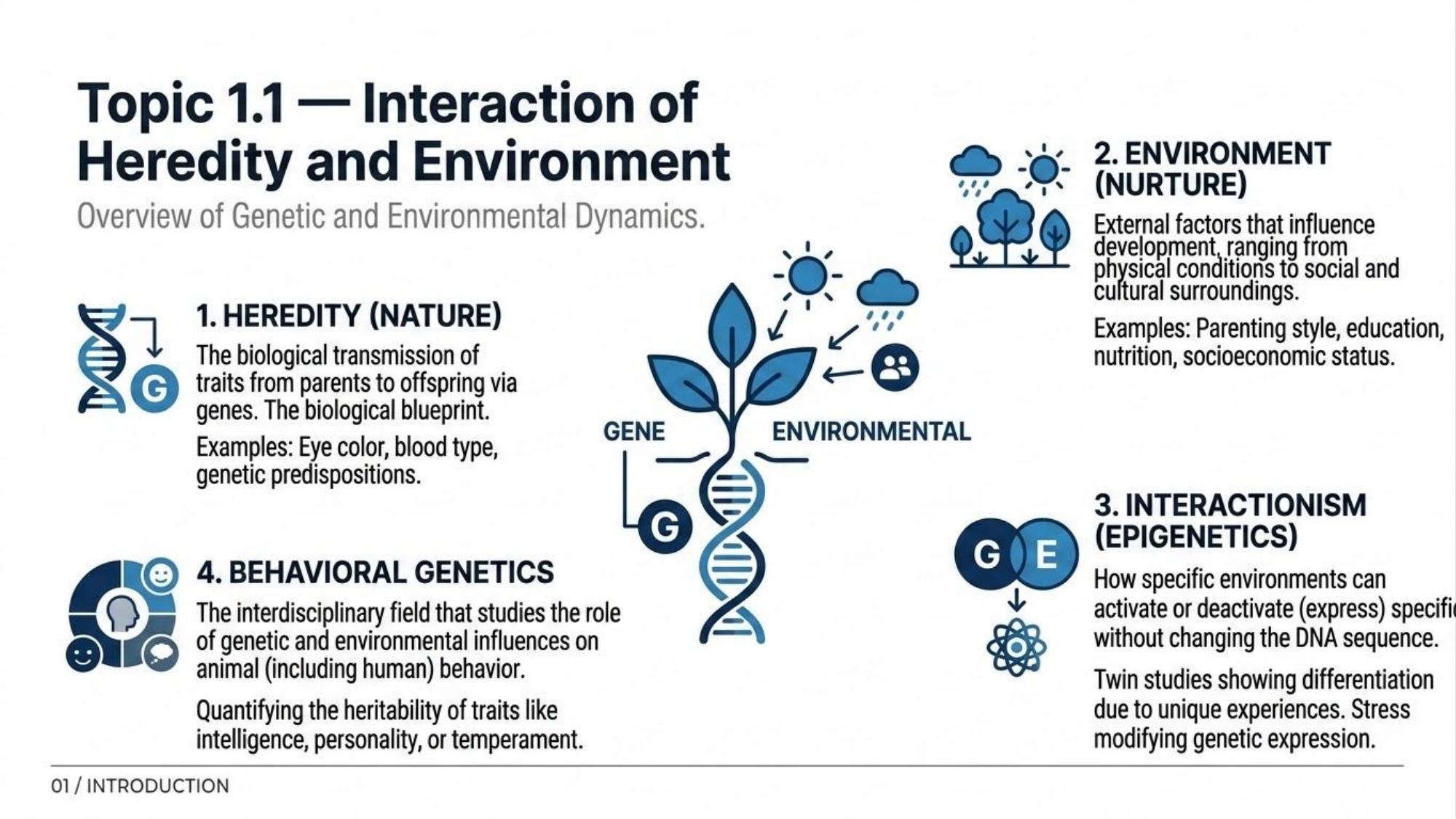
Heredity (nature)
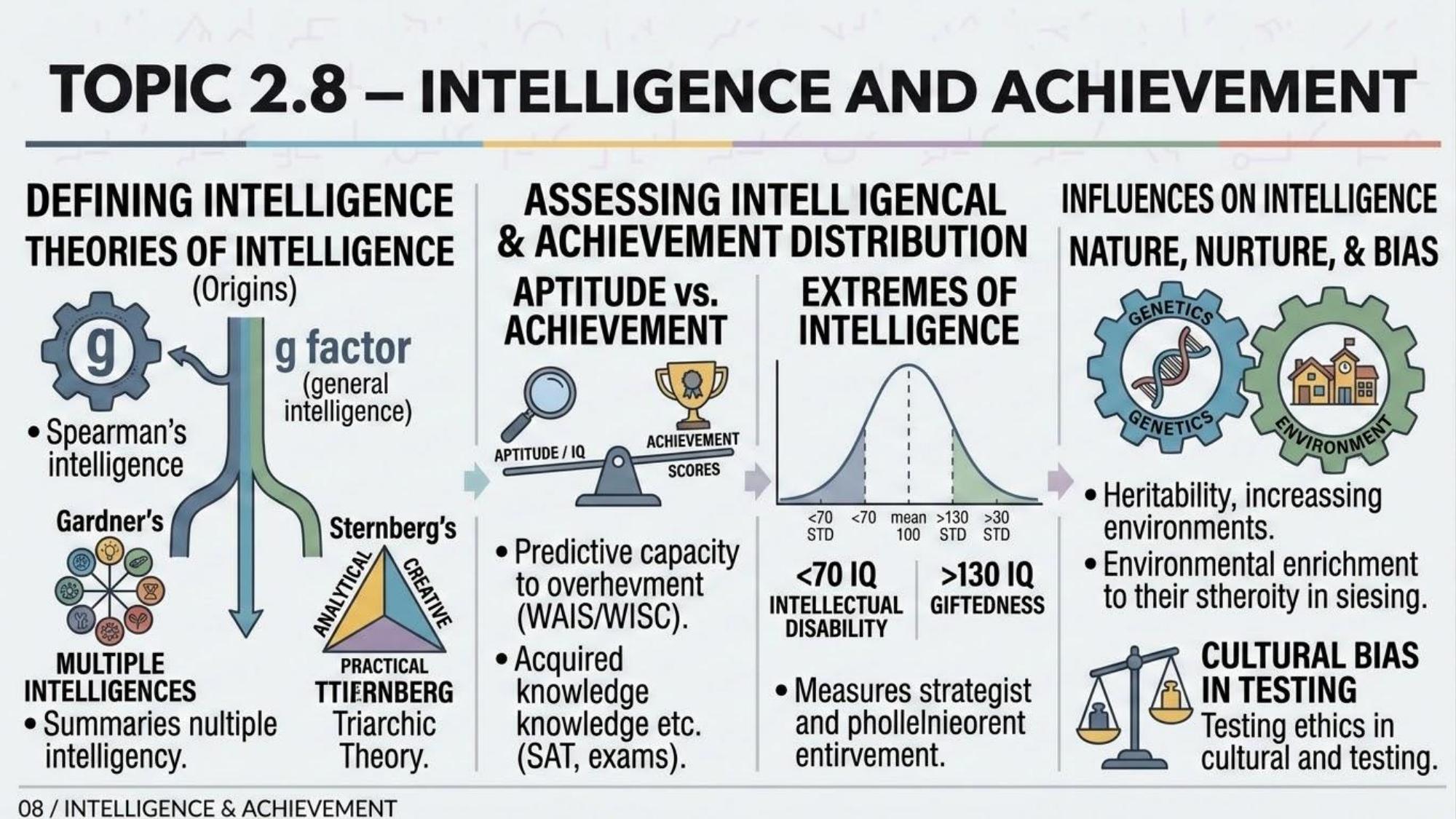
Genetic or predisposed characteristics that influence physical, behavioral, and mental traits and processes, the biological inheritance you receive from your parents.
Heredity & Env.Environment (nurture)
External factors a person experiences, family interactions, education, culture, that shape behavior and mental processes alongside heredity.
Heredity & Env.Evolutionary perspective
An approach that explains behavior and mental processes through natural selection, traits that increased survival and reproductive success were passed on.
Heredity & Env.Twin/family/adoption studies
Research designs psychologists use to estimate the relative roles of genes versus environment by comparing relatives with different degrees of shared DNA or upbringing.
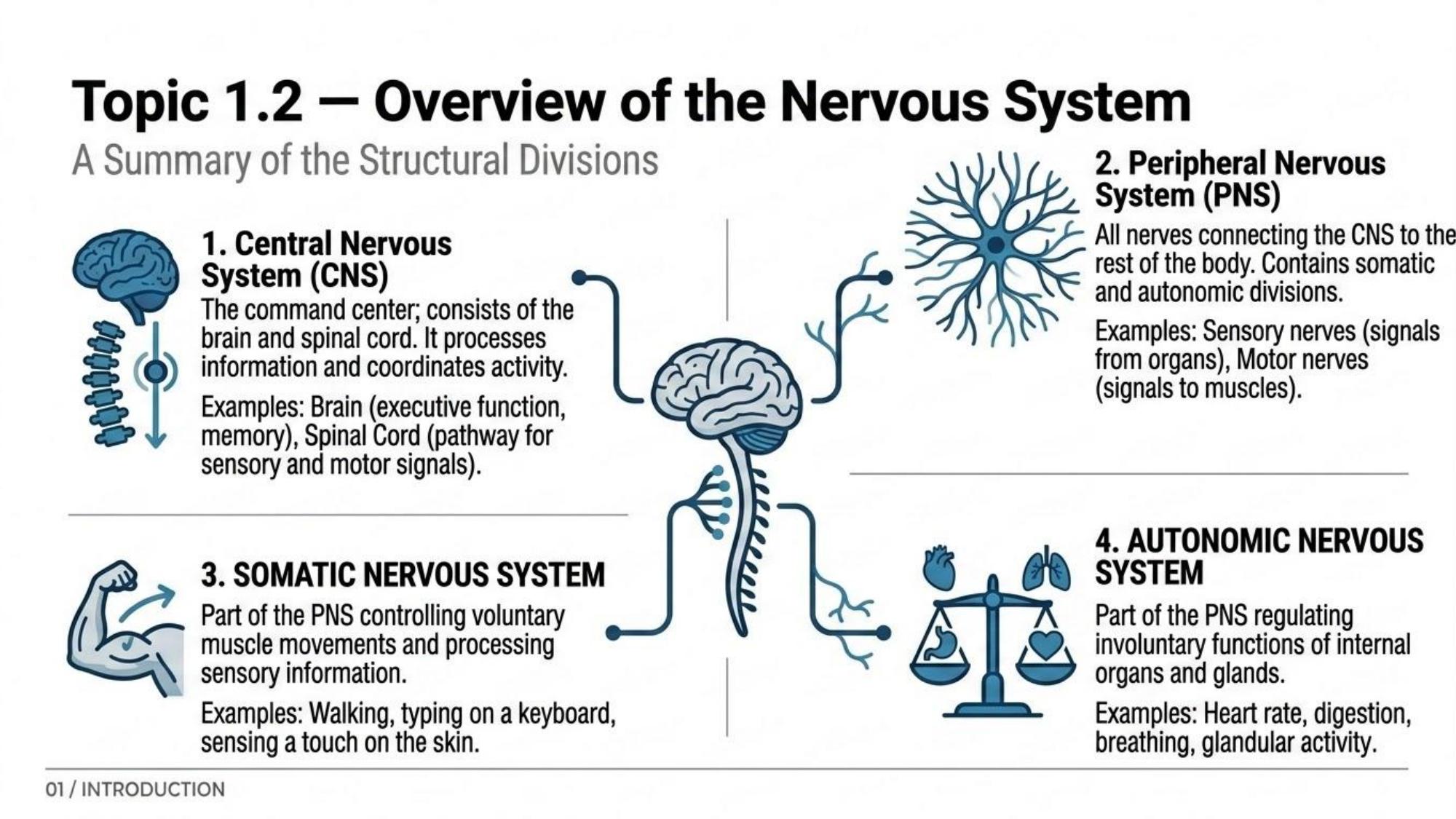
Heredity & Env.Central nervous system (CNS)
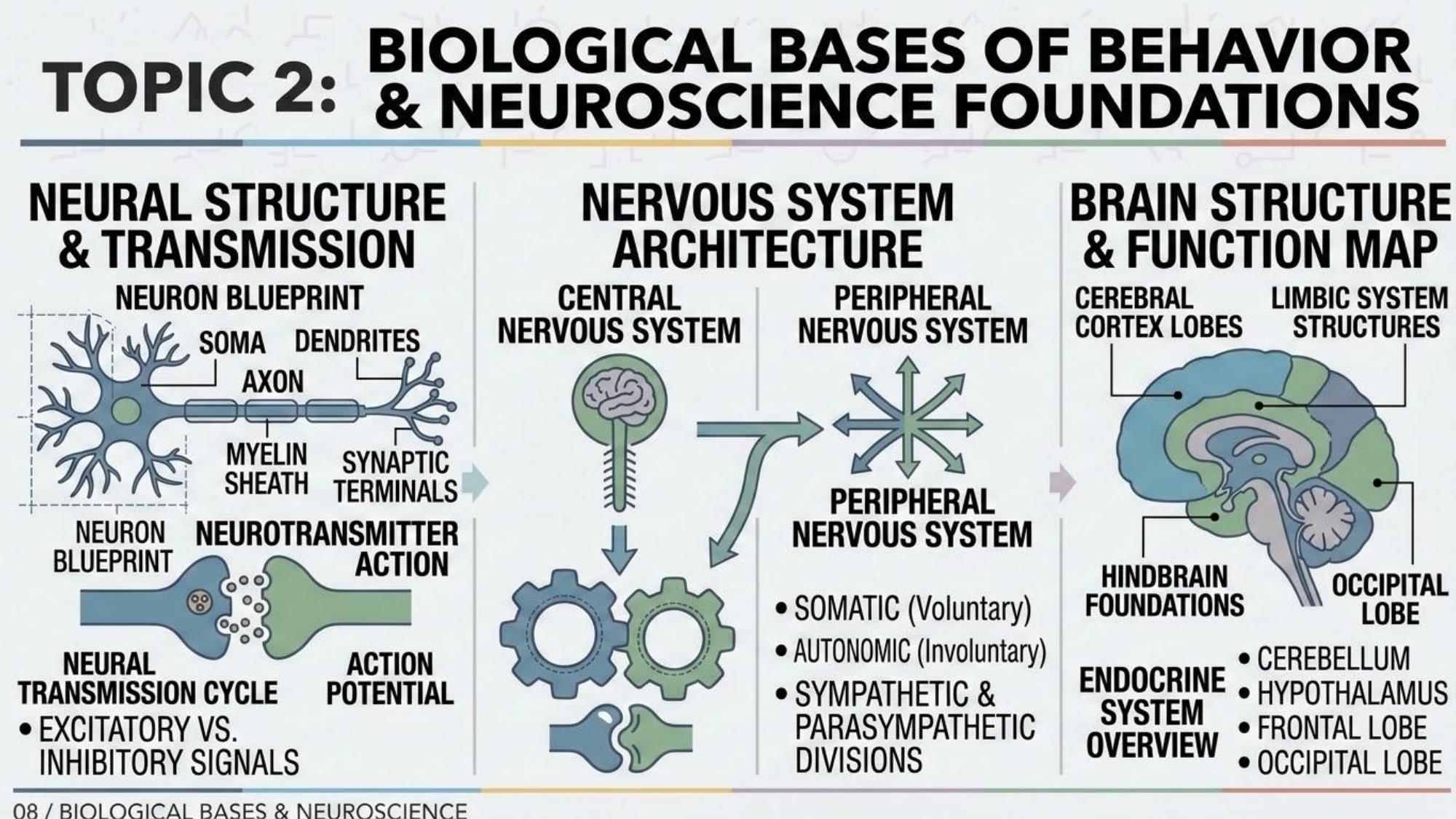
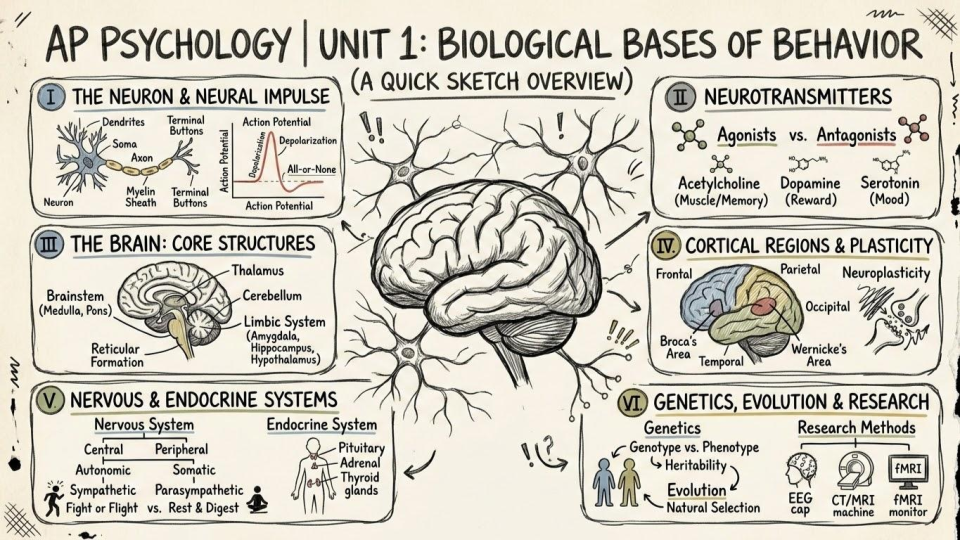
The brain and spinal cord, the body's central command center that processes information and coordinates responses across all body systems.
Nervous SystemPeripheral nervous system (PNS)
The network of nerves outside the CNS that relays signals between the brain/spinal cord and the rest of the body; divided into autonomic and somatic branches.
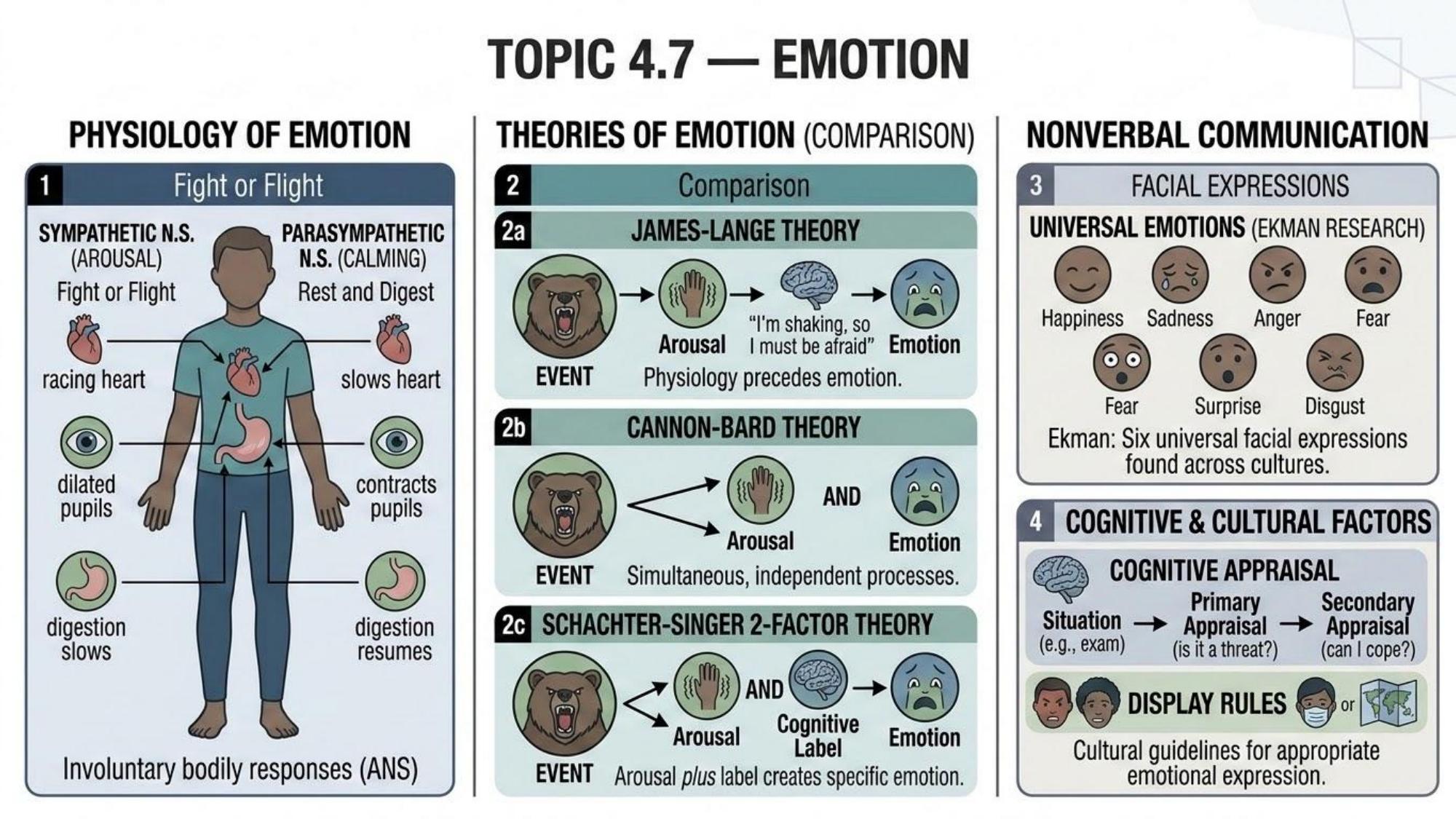
Nervous SystemAutonomic nervous system
Part of the PNS controlling involuntary processes like heart rate and digestion; split into the sympathetic (arousing) and parasympathetic (calming) divisions.
Nervous SystemSomatic nervous system
Part of the PNS that controls voluntary movement of skeletal muscles, what you use when you decide to wave your hand or walk.
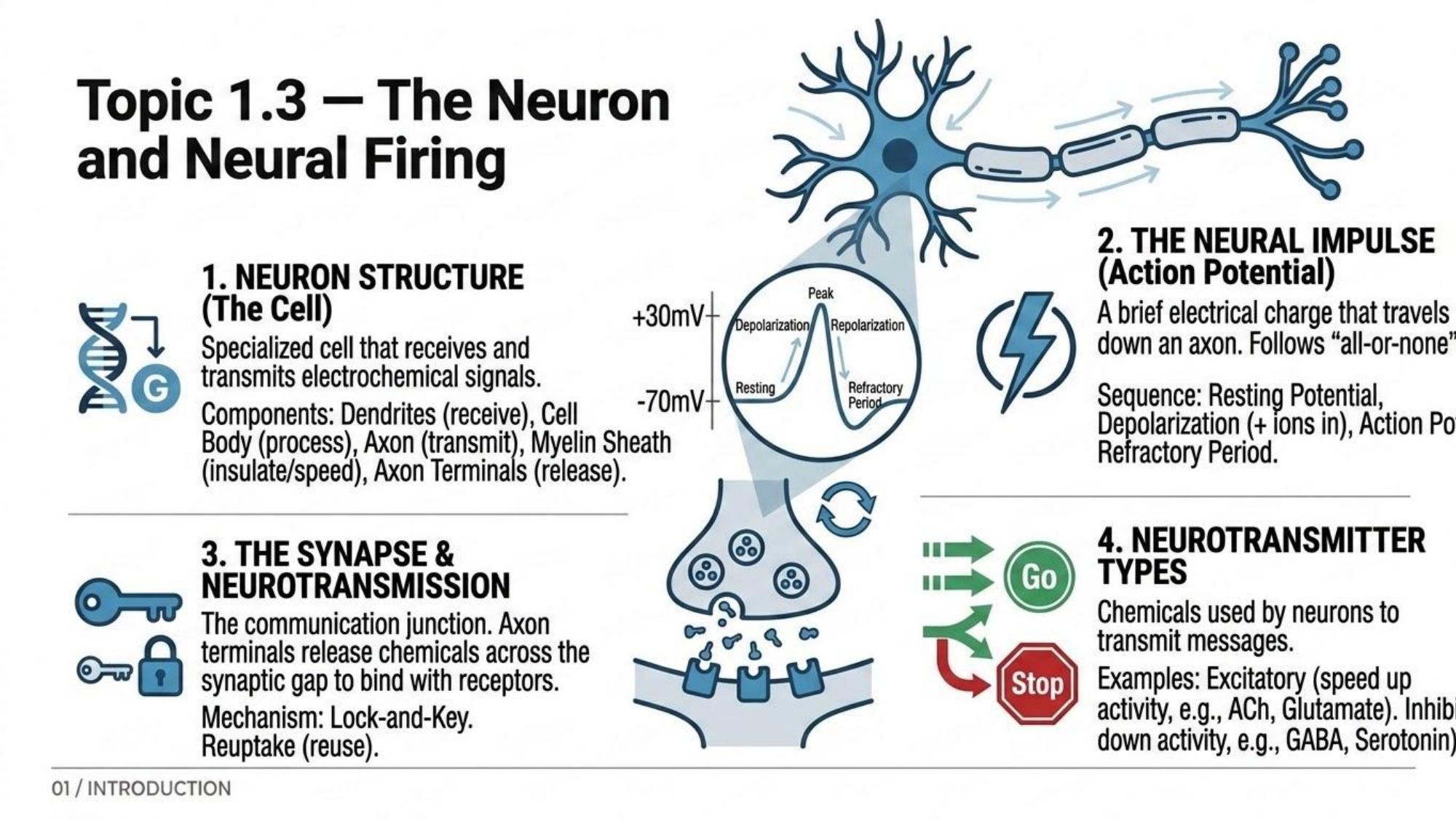
Nervous SystemNeuron
The basic cell of the nervous system, made of dendrites (receive), a cell body (soma), and an axon (sends signals to other neurons or muscles).
NeuronAction potential
The brief electrical impulse that travels down a neuron's axon when it fires, allowing communication with other neurons.
NeuronSynapse
The tiny gap between two neurons where neurotransmitters cross from one to the next, enabling chemical communication.
NeuronNeurotransmitter
A chemical messenger (like dopamine, serotonin, GABA, acetylcholine) released at the synapse to influence the next neuron's firing.
NeuronReuptake
The process by which neurotransmitters are reabsorbed by the sending neuron after crossing the synapse, a target of many psychiatric medications.
NeuronEndocrine system
A network of glands (like the pituitary, thyroid, and adrenals) that release hormones into the bloodstream to influence growth, mood, and arousal.
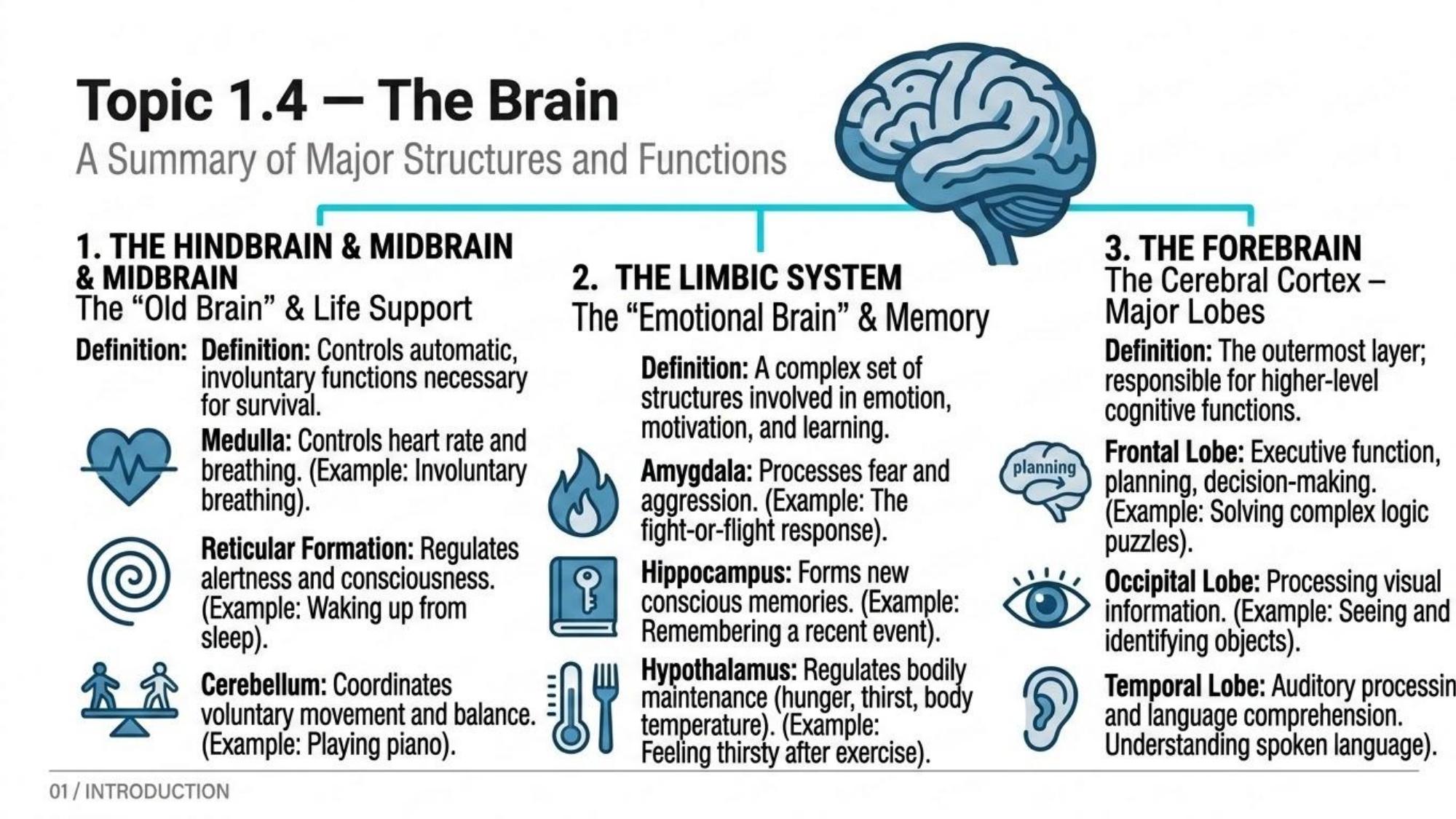
Brain & BodyCerebral cortex
The wrinkled outer layer of the brain responsible for higher functions like thinking, planning, language, and perception.
BrainFrontal lobe
Brain region behind the forehead that handles decision-making, planning, voluntary movement (motor cortex), and personality.
BrainHippocampus
A seahorse-shaped structure deep in the brain critical for forming new long-term memories.
BrainAmygdala
Almond-shaped brain structure that processes emotions, especially fear and aggression.
BrainPlasticity
The brain's ability to reorganize itself by forming new neural connections, particularly important after injury or during learning.
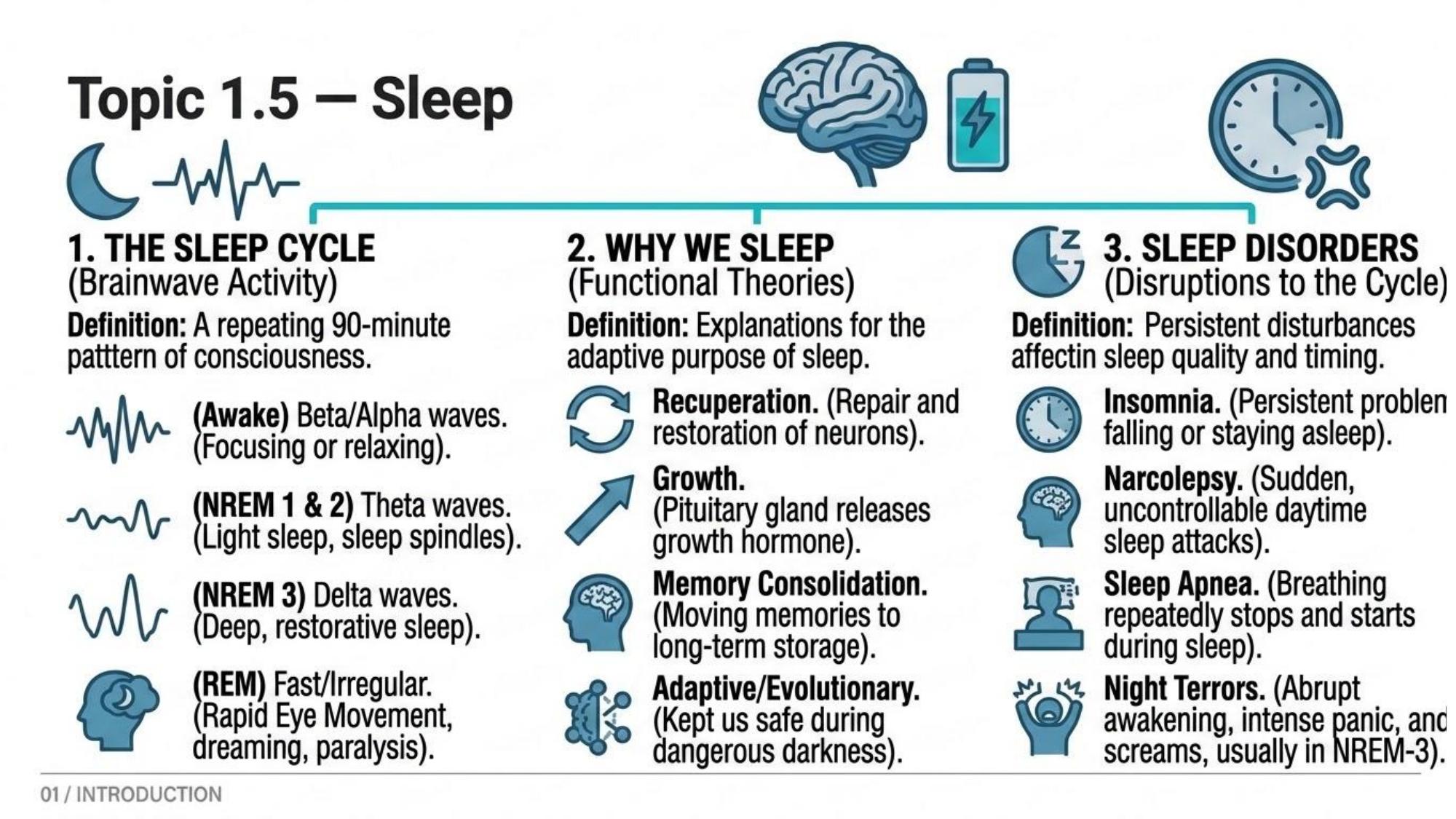
BrainSleep stages (NREM/REM)
The cycles of sleep, including deeper non-REM stages and REM sleep where vivid dreams occur and the body is largely paralyzed.
SleepCircadian rhythm
The roughly 24-hour internal biological clock that regulates the sleep-wake cycle and other daily processes.
SleepInsomnia
A sleep disorder marked by persistent trouble falling asleep, staying asleep, or getting restful sleep.
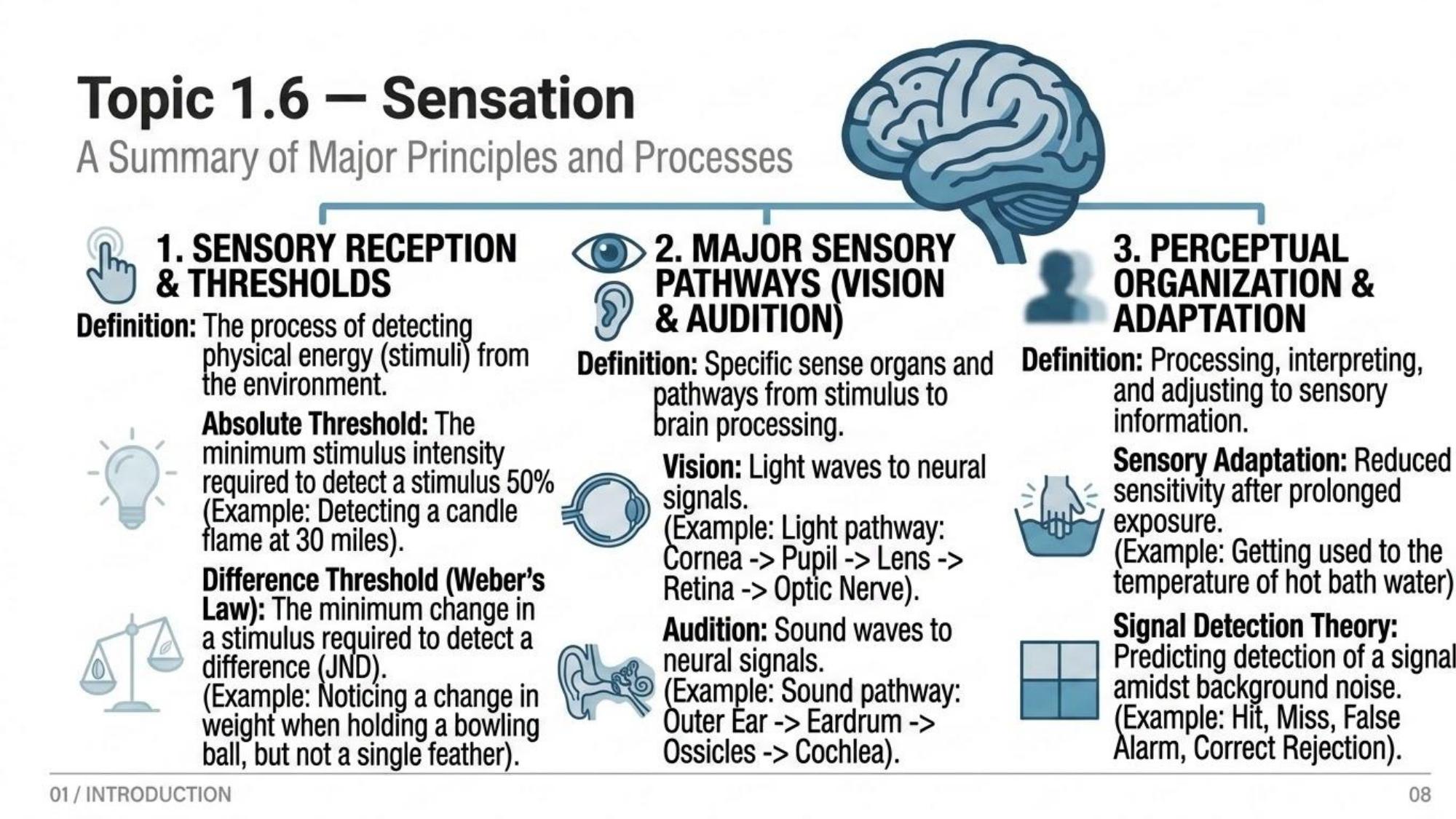
SleepSensation vs. perception
Sensation is detecting raw stimuli through the senses; perception is the brain's organization and interpretation of those stimuli into meaningful experiences.
SensationAbsolute threshold
The minimum stimulus intensity (like the faintest sound) a person can detect 50% of the time.
SensationSensory adaptation
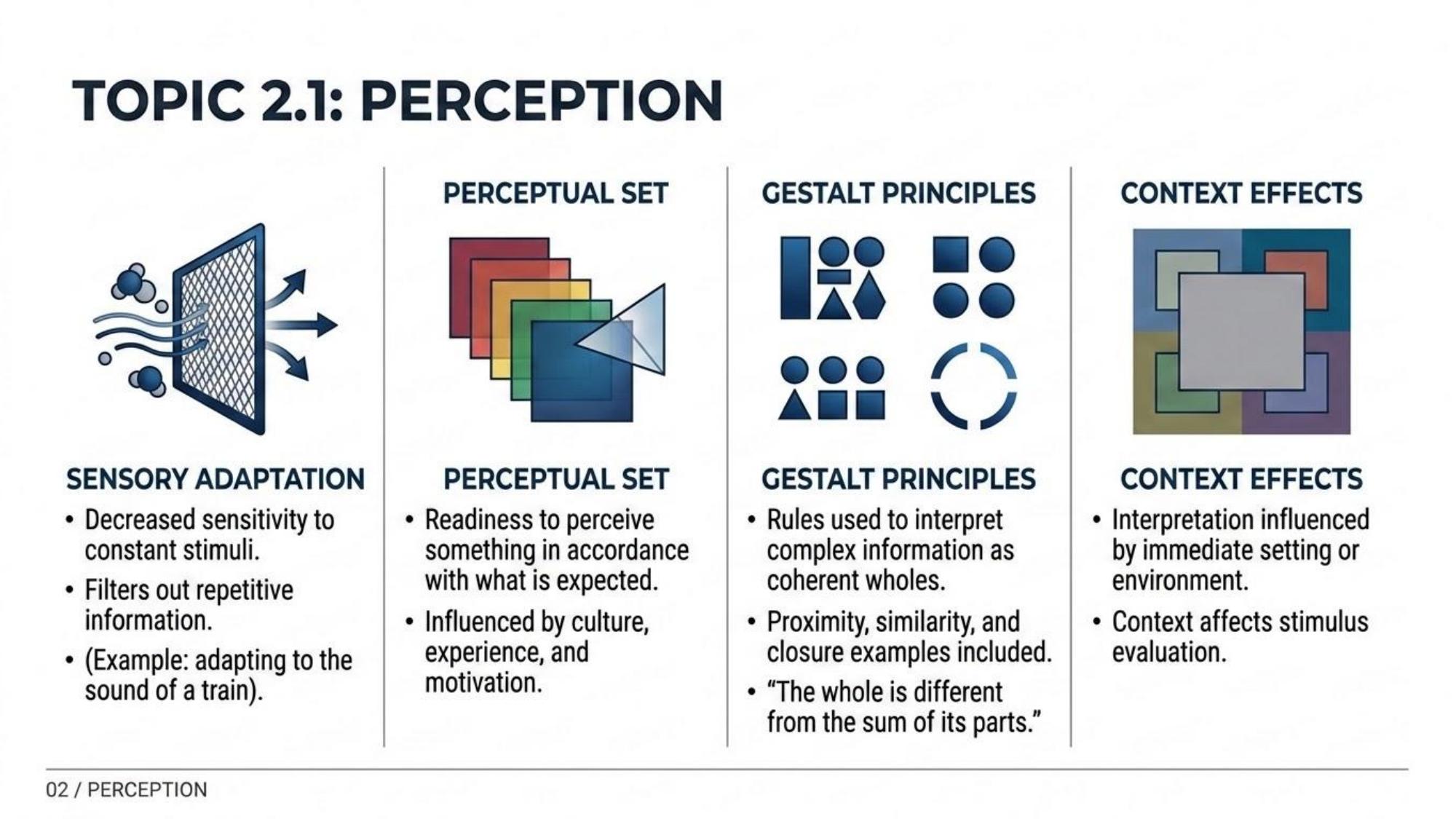
Reduced sensitivity to a constant stimulus over time, like no longer noticing a smell after a few minutes in a room.
SensationTransduction
The conversion of physical sensory energy (light, sound, pressure) into the neural signals the brain can process.
SensationBig Idea 1
All behavior has a biological basis
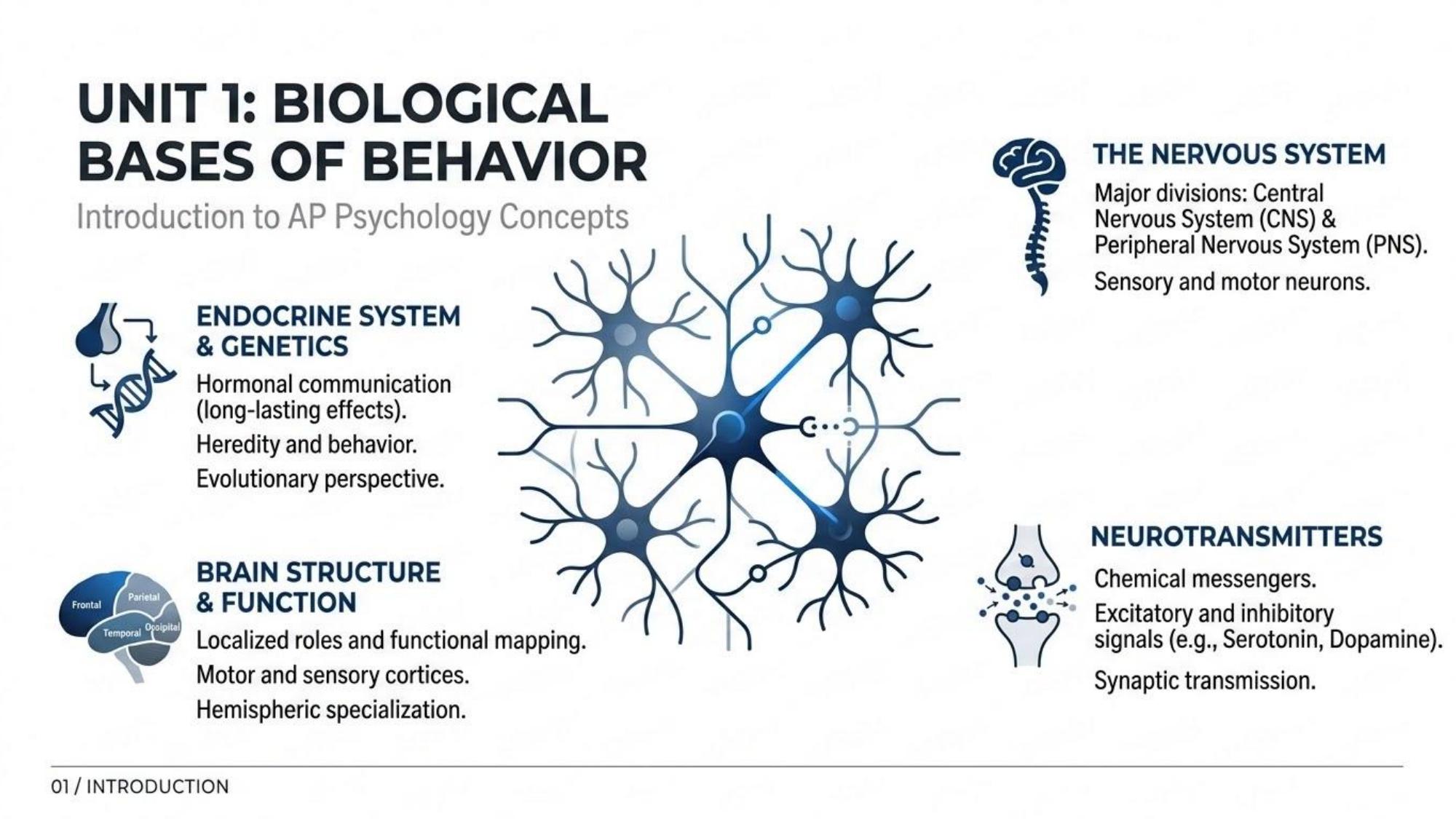
Every thought, feeling, and action you have is grounded in the activity of your nervous system. Genes, neurons, neurotransmitters, hormones, and brain structures all interact to produce behavior, meaning psychology is, at its core, a biological science.
Big Idea 2
Heredity and environment interact, it's never just one
AP Psychology starts by replacing the old nature-vs.-nurture debate with a more accurate view: genes set predispositions, but the environment shapes how those predispositions develop. Twin and adoption studies show both factors at work in nearly every trait.
Big Idea 3
Neurons communicate through electrochemical signals
When a neuron fires, an electrical action potential travels down its axon and triggers the release of neurotransmitters into the synapse. These chemicals influence whether the next neuron fires, and small changes in this process can shape mood, learning, and behavior.
Big Idea 4
The brain is specialized but also remarkably plastic
Different regions handle different functions, the frontal lobe for planning, the hippocampus for memory, the amygdala for emotion, but the brain can also reorganize itself after injury or with learning. This plasticity is greatest early in life but never disappears.
Big Idea 5
Sleep is biologically essential, not optional
The circadian rhythm and the sleep cycle are not mere routines, they actively support memory consolidation, emotional regulation, and physical health. Disruptions like insomnia, narcolepsy, and sleep apnea have measurable consequences for thinking and well-being.
Big Idea 6
Sensation is biological; perception is psychological
Sensation is the conversion of physical energy into neural signals (transduction). Perception is the brain's active interpretation of those signals, shaped by attention, expectation, and context. The same input can produce different experiences in different people.
Question 1 of 0
Score: 0/0
Practice questions coming soon.
Loading practice question...